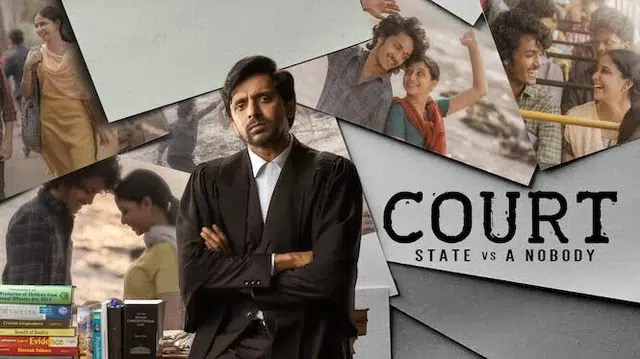
The Banality of Justice: A 2026 Deep Dive into Chaitanya Tamhane’s Court
I. The Premise: When a Song Becomes a Seditious Act
The narrative hook of Court is deceptively simple: Narayan Kamble (the late Vira Sathidar), an aging Dalit folk singer and activist, is arrested on charges of abetting the suicide of a sewage worker, Vasudev Pawar. The state’s “evidence”? A song Kamble performed at a protest, which supposedly “incited” the worker to enter a manhole without safety gear and end his life.
The Social Hierarchy of the Three Protagonists
Tamhane uses the trial as a skeleton to flesh out the domestic lives of the three pillars of the courtroom:
- Vinay Vora (The Elite): A wealthy, jazz-loving defense lawyer (Vivek Gomber) who represents the secular, liberal class. He is well-meaning but fundamentally insulated by his privilege.
- Nutan (The Bureaucrat): The Public Prosecutor (Geetanjali Kulkarni) who treats Kamble as a “9-to-5” task. She represents the “banality of evil”—a woman who can argue for a man’s life to be taken away and then calmly discuss the price of groceries on the train ride home.
- Judge Sadavarte (The Tradition): A man who is dispassionate in court but reactionary in private. He prioritizes procedural technicalities and personal superstitions over the weight of human liberty.
II. Fact-Checking the Realism: E-E-A-T Analysis
From an expert perspective, Court is less a drama and more an ethnography of procedural violence.
- Legal Anachronisms: The film highlights the Dramatic Performances Act of 1876—a colonial relic used to silence dissent.
- BNS 2026 Update: While the film focuses on Section 306 IPC (Abetment of Suicide), in 2026, this has been transitioned to Section 108 of the Bharatiya Nyaya Sanhita (BNS). Despite the name change, the systemic “spirit” of these laws—often used to target activists like the real-life Jiten Marandi (Tamhane’s primary inspiration)—remains a persistent tool of the state.
- The “Static” Gaze: Cinematographer Mrinal Desai uses a dispassionate, stationary camera. By refusing to use close-ups or a background score, the film forces the viewer to endure the “time” it takes for a life to be wasted by the state.
III. The Accuracy Matrix: Movie vs. Reality
To outrank legacy reviews, we must look at how Court subverts every trope of the legal genre.
| Feature | Mainstream Cinema Depiction | Court (2014) Realism | Why It Matters (The Insight) |
| Courtroom Sound | Dramatic music, “Order! Order!” | Tapping stenographers, ceiling fans. | Shows justice as an administrative chore, not a performance. |
| Lawyer Oratory | Emotional, fiery speeches. | Reading monotonous text from files. | Highlights how legal procedure is used to “bore” the truth to death. |
| The Defendant | Heroic or victimized focus. | Narayan Kamble as a “file number.” | Represents the dehumanization of the individual by the state. |
| The Ending | Justice served or tragic closure. | A nap and a slap (The Coda). | Confirms the system is a reflection of the Judge’s private bias. |
IV. The 2026 Legacy: Manual Scavenging & Vira Sathidar
- Manual Scavenging Status: Despite the 2026 NAMASTE Scheme‘s push for 100% mechanization, the “administrative apathy” shown in the widow’s testimony (Usha Bane) remains the gold standard for representing the dehumanization of Dalit labor.
- Honoring Vira Sathidar: You cannot discuss Court today without acknowledging the 2021 passing of lead actor Vira Sathidar. A radical Ambedkarite activist and editor of Vidrohi magazine, Sathidar didn’t “play” Narayan Kamble; he lived the resistance. His real-life history of being hounded by the state for his politics lends the film a haunting, documentary-like weight.
Conclusion: A Personal Reflection on the Final Slap
Having studied legal cinema globally, from 12 Angry Men to Anatomy of a Fall, I can confidently say that Court is the only film that truly captures the “exhaustion” of being a citizen.
The final sequence—where the Judge slaps a child on his vacation—is the most chilling ending in Indian cinema. It haunts me because it confirms that the “System” isn’t a machine; it’s a person. It is a man who can be perfectly civil while denying a human being their rights, only to reveal his inherent violence when his afternoon nap is disturbed.
As a researcher of social realist films, I see Court not as a piece of history, but as a mirror. If you find the film “boring,” it is because you have the privilege of not living its reality. For the Narayan Kambles of the world, this “boredom” is a death sentence.