Minimalist Living Trends 2026: The Rise of “Warm Minimalism” & Soulful Design
For the better part of a decade, “minimalism” has suffered from a PR problem.
When you hear the word, you likely picture a stark, hospital-white room. You imagine a single uncomfortable metal chair, an echoey hallway, and a complete lack of personality. For a long time, minimalism was synonymous with deprivation—a contest to see who could own the least amount of things, often at the expense of comfort.
But as we approach 2026, the pendulum has swung. The era of the “sterile showroom” is officially dead.
A new, more sophisticated movement has taken its place: Warm Minimalism. This evolution is not about living with less for the sake of a metric; it is about living with better. It prioritizes emotional durability, tactile richness, and psychological well-being. It is minimalism with a soul.
If you are looking to declutter your home and your mind without sacrificing coziness, this is your ultimate forecast for the minimalist living trends of 2026.
The Philosophy Shift: From Visual to Emotional
To understand the trends of 2026, we first have to understand the why. In a world that feels increasingly chaotic—dominated by rapid AI advancements, economic fluctuations, and digital noise—our homes are no longer just places to sleep. They are sanctuaries for decompression.
The old minimalism was about visual silence (hiding everything). The new minimalism is about cognitive rest.
It acknowledges that while clutter creates stress, so does a room that feels like a cold clinic. The goal of 2026 is to create spaces that lower your cortisol levels through softness, nature, and intentionality.
Trend 1: The “Beige” Renaissance & The Death of Gray
If there is one headline for 2026, it is this: Cool Gray is out. Warm Earth Tones are in.
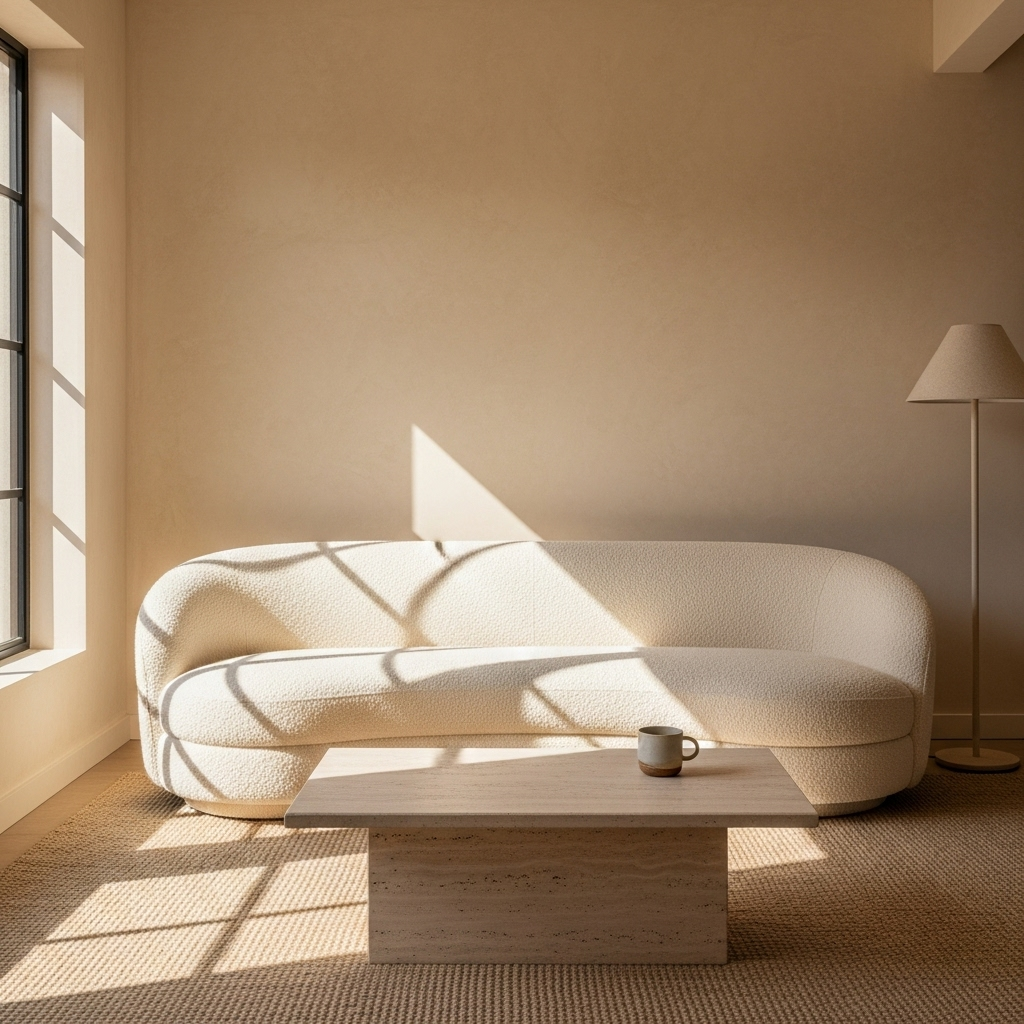
For years, “Millennial Gray” was the safe choice for developers and flippers. But psychologically, gray can feel detached and gloomy. Warm Minimalism embraces a palette derived from nature—colors that wrap you in a “virtual hug.”
The New Neutral Palette:
- Oatmeal and Linen: replacing stark white.
- Plaster Pink: A barely-there, dusty pink that reads as a neutral but adds warmth.
- Terracotta and Clay: Used for grounding elements like tiles or accent walls.
- Sage and Olive: Muted greens that connect the indoors with the outdoors.
This shift is crucial for lighting. White light bounces harshly off bright white walls. But when sunlight hits a warm beige or lime-washed wall, it creates a golden glow that instantly makes a space feel inviting.
Trend 2: Neuroaesthetics & “Soft” Geometry
Neuroaesthetics is the study of how the brain responds to beauty. Research shows that humans are hardwired to feel safer around curves than around sharp angles. Sharp corners trigger a subtle “danger” signal in the amygdala, while curves suggest safety and fluidity.
In 2026, Minimalist furniture is softening up.
- The Curvy Sofa: Rigid, rectangular sectionals are being replaced by kidney-shaped sofas and curved bouclé armchairs.
- Arches: You will see more arched doorways, arched mirrors, and even painted arches on walls to break up the “boxy” feeling of modern apartments.
- Circular Flow: Coffee tables and dining tables are moving toward round or oval shapes, which improves traffic flow and encourages conversation.
The Takeaway: If you buy one piece of furniture this year, skip the sharp edges. Go for something with a soft silhouette.
Trend 3: Texture is the New Color
In a minimalist room, where you don’t have fifty knick-knacks to look at, the eye needs something else to rest on. That “something” is texture.
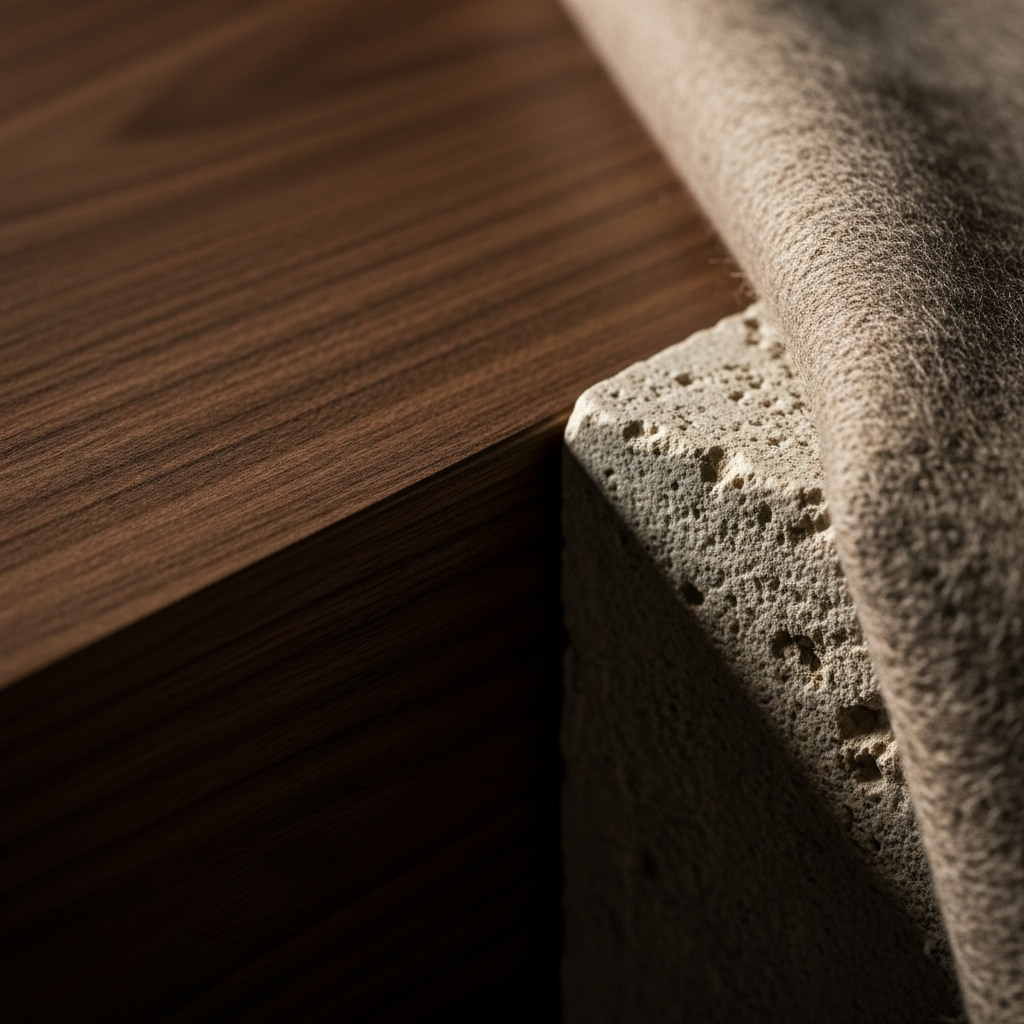
This is the secret sauce of Warm Minimalism. When you strip away the excess, the materials you are left with must be high quality and visually interesting. This is often called “The Tactile Home.”
Key Textural Entities:
- Limewash & Plaster: Flat paint feels lifeless. Limewash adds a cloudy, velvety texture to walls that changes with the light throughout the day.
- Raw Stone: We are moving away from high-gloss, polished marble (which feels cold) to honed Travertine and Limestone. These stones have holes, veins, and imperfections that make them feel organic.
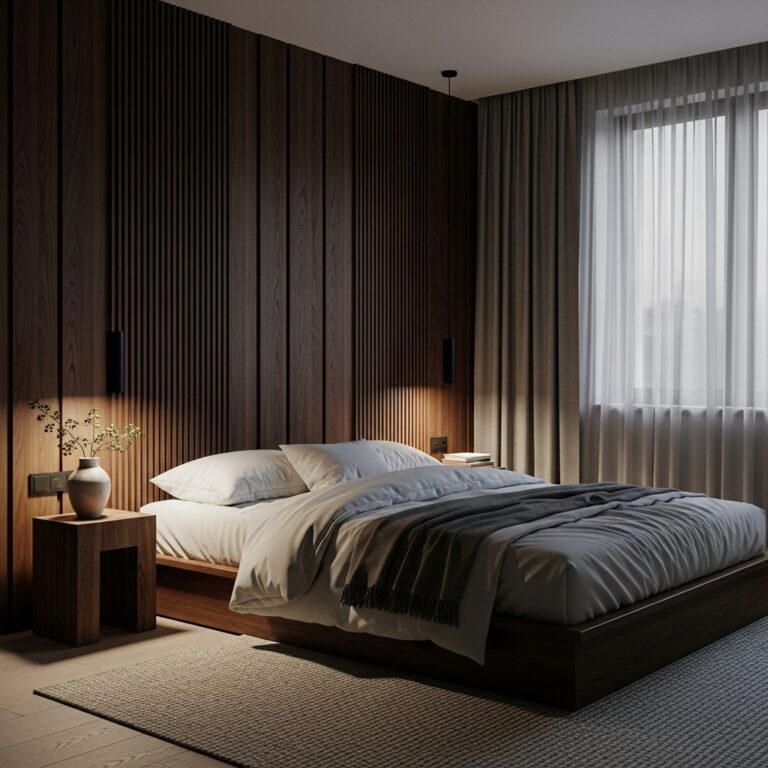
- Wabi-Sabi Wood: This Japanese concept finds beauty in imperfection. Expect to see raw, matte-finished woods (like walnut and white oak) rather than shiny, lacquered veneers.
Trend 4: Japandi 2.0 (The Moody Turn)
Japandi—the hybrid of Japanese rusticism and Scandinavian functionality—has been the reigning king of design for three years. It isn’t going away, but it is getting darker.
Early Japandi was very light: blonde wood and white walls. Japandi 2.0 introduces contrast to create depth.
- Charred Timber (Shou Sugi Ban): Blackened wood is being used for accent chairs, slat walls, and cabinetry.
- Contrast Styling: A light room grounded by a dark charcoal rug or a black stained coffee table.
This contrast prevents the “floating” feeling of all-white rooms. It anchors the space, giving the eyes a place to land.
Trend 5: The “Invisible” Smart Home
Minimalism in 2026 is not Luddite; it embraces technology, but it refuses to let technology dictate the aesthetic. The goal is “Tech-Free Visuals, High-Tech Function.”
We are seeing a backlash against the “black mirror” effect (giant TV screens dominating the living room).
- The Frame TV: TVs that display matte art when off are non-negotiable for minimalists.
- Hidden Charging: Wireless charging pads milled directly into stone countertops or wood desks, so there are no visible cords or plastic pucks.
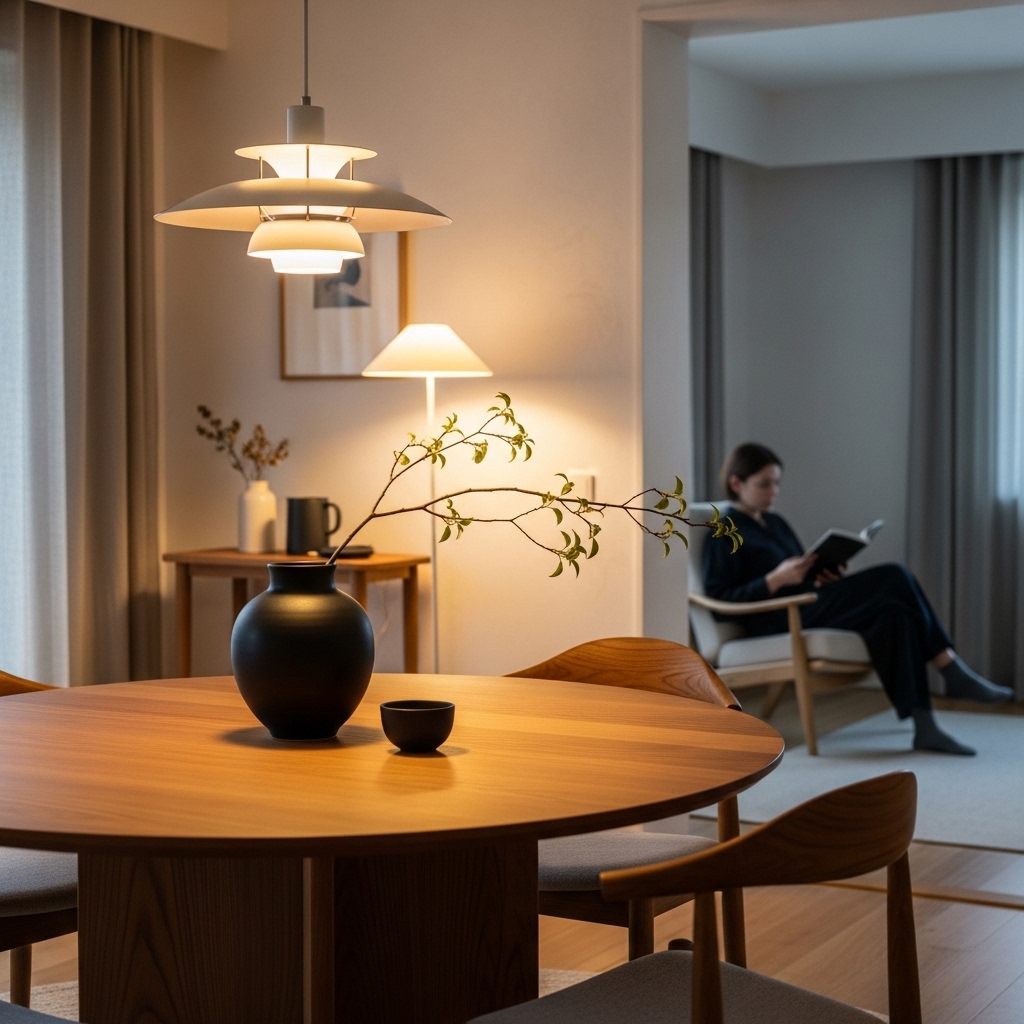
- Smart Lighting: Bulbs that automatically adjust their color temperature to match your circadian rhythm—bright and cool in the morning for focus, warm and dim in the evening for melatonin production.
Trend 6: Intentional Consumerism (Buy Once, Buy Well)
This is the economic backbone of the movement. Inflation and environmental awareness have shifted the mindset from “Fast Furniture” to “Heirloom Pieces.”
The 2026 minimalist would rather have an empty corner than fill it with a cheap particle-board shelf that will break in two years. This is the “Buy It For Life” (BIFL) philosophy.
- Second-Hand Economy: Vintage furniture is booming. A 1960s solid wood dresser adds more character and value to a minimalist room than a brand-new flat-pack item.
- Craftsmanship: There is a renewed appreciation for joinery, handmade ceramics, and solid materials.
How to Start: A Practical Guide for 2026
You don’t need to renovate your entire house to embrace Warm Minimalism. Start with these three steps:
- The “20% Edit”: Go through your living room and remove 20% of the decor items. Take them out of the room completely. Does the space feel empty, or does it feel like it can breathe?
- Change Your Bulbs: Swap cool white (4000K-5000K) bulbs for warm white (2700K-3000K). This immediately softens the room.
- Add Organic Texture: Introduce a jute rug, a wool throw, or a wooden bowl. These natural elements break up the rigidity of modern homes.
Final Thoughts
The Minimalist Living trends of 2026 offer a permission slip. You have permission to own things. You have permission to love color. You have permission to be comfortable.
The goal is no longer to impress guests with how tidy your home is; the goal is to create a home that supports your best life. It is about clearing the distractions so you can focus on what actually matters.
As we move into this new year, remember: Your home should be the background to your life, not the antagonist.