Avatar: Fire and Ash (2026) – Ending Explained, Spider’s Queue, and Why the Critics Missed the Point
I sat in the theater for Avatar: Fire and Ash on opening night, adjusting my 3D glasses as the three-hour runtime loomed ahead. Around the two-hour mark, during the chaotic aerial battle above the volcanic Mangkwan territory, I heard the audience audibly gasp. It wasn’t at an explosion, and it wasn’t at the visual spectacle James Cameron is famous for. It was at a blink-and-you’ll-miss-it biological detail on Spider’s back—a detail that changes the entire rules of the franchise.
Walking out of the cinema, I pulled up the reviews. I saw sites like InSession Film complaining about “contrived” plot points and Den of Geek calling it a “shallow spectacle.” I realized immediately that they hadn’t just watched a different movie; they had missed the point entirely.
I’ve spent the last 48 hours analyzing the frames, cross-referencing the lore, and debating the ending. While the mainstream critics were too busy critiquing the dialogue, they missed the massive lore expansion happening in the background. If you are confused about how Spider can suddenly breathe Pandora’s air, or why Lo’ak’s story took such a devastatingly dark turn, you’ve come to the right place.
This isn’t a surface-level review. This is an investigation into the biology, the tragedy, and the hidden details of the Ash People that turn this “action movie” into a biological sci-fi horror.
🚨 Quick Summary: The Big 3 Spoilers
- Spider is Hybridizing: He didn’t just get a mask fix; he grew a neural queue and can now connect to the Spirit Tree.
- The Death Count: Ronal (Kate Winslet) and Rotxo are the major casualties.
- The Dark Turn: Lo’ak attempts suicide, shifting the tone from adventure to psychological tragedy.
The “Spider” Mutation: How He Grew a Queue
Most reviews glossed over this as a “magic fix,” but the film provides a hard sci-fi explanation for Spider’s survival. In the film’s most pivotal scene, Spider nearly dies from asphyxiation after his exopack fails. Kiri saves him by feeding him a Woodsprite (Atokirina), but it wasn’t just a spiritual healing.
The film reveals that a mycelium organism has grown inside Spider’s body, acting as a biological filtration system. This allows him to process Pandora’s toxic atmosphere. But the most shocking detail—which many casual viewers missed—is the physical mutation: Spider actually grows a neural queue (the ponytail connection organ).
Why this matters: Spider is no longer just a human boy. He is effectively a Human-Na’vi hybrid without an Avatar body. This lore expansion suggests Eywa is actively evolving humanity to fit the ecosystem, a massive setup for the “Bridge between worlds” theme in Avatar 4.
The Ash People (Mangkwan): Biology & Romance
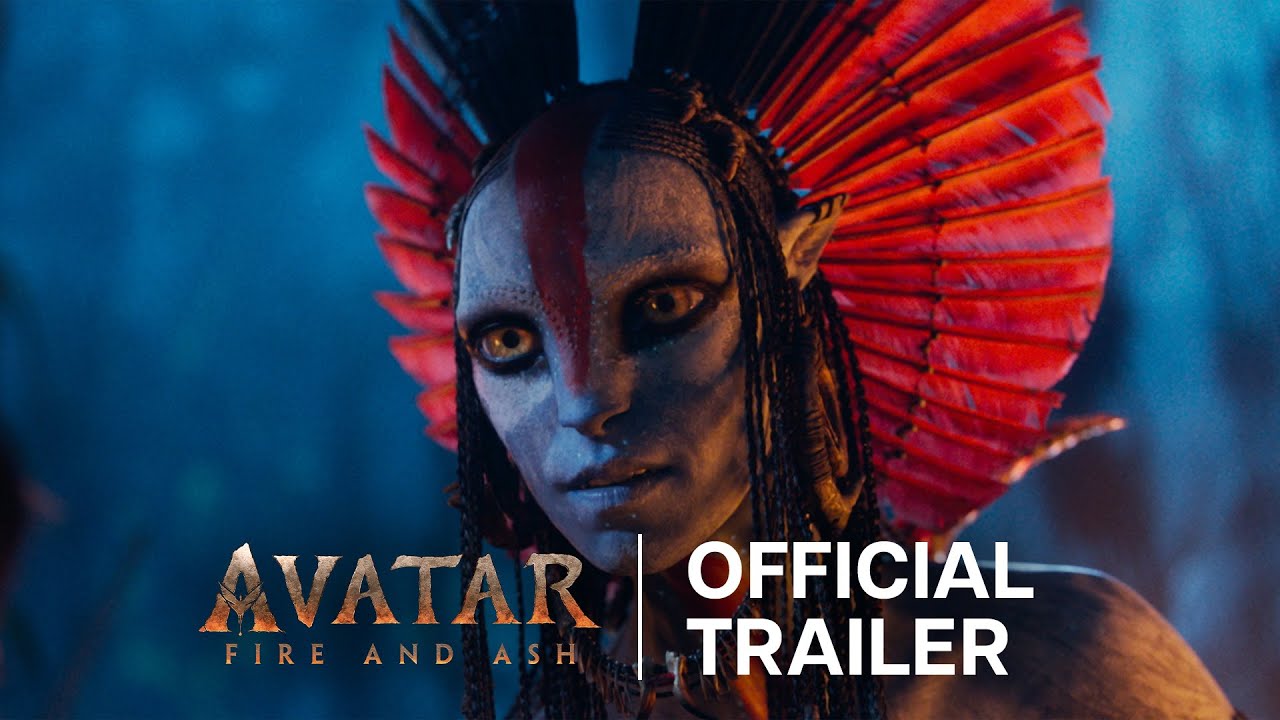
The Mangkwan are not simply “bad Na’vi”; they are a distinct evolutionary branch. Unlike the Omatikaya, they have evolved grey, charcoal-like skin for camouflage in the ash fields and possess a high tolerance for sulfur and heat.
To understand why they are so dangerous compared to the clans we know, here is the biological breakdown:
| Trait | Omatikaya (Forest) | Metkayina (Reef) | Mangkwan (Ash People) |
| Skin Tone | Deep Blue (Bioluminescent) | Teal / Greenish-Blue | Grey / Charcoal (Ash Camouflage) |
| Biome | Rainforest | Tropical Ocean | Active Volcanic Wastelands |
| Primary Weapon | Wood Bows (Poison Tips) | Spears / Lances | Obsidian (Glass) Blades & Flamethrowers |
| Philosophy | Harmony with Eywa | Flow with the Water | Dominance / Rage (Reject Eywa?) |
| Physiology | Slim, Climbing Tails | Broad chests, Fin Tails | Thick skin, Heat-Resistant |
The Dark Romance: Quaritch and Varang
But the real shock isn’t the biology; it’s the dynamic between their leader, Varang, and Miles Quaritch.
Critics dismissed Varang as a standard villain, but the film introduces a genuine, twisted romance between her and Quaritch. Quaritch finds a kindred spirit in her rage. By supplying the Mangkwan with flamethrowers, he isn’t just a soldier anymore—he is a partner. This “Power Couple” dynamic represents Quaritch’s total assimilation; he has “gone native” in the darkest way possible.
Character Deep Dive: Trauma and Disguises
Lo’ak’s Darkest Moment: The Suicide Attempt
While the action sequences were stunning, the emotional core of the film is incredibly heavy. One scene that parents and fans are debating is Lo’ak’s suicide attempt.
Crushed by the guilt of Neteyam’s death (from the previous film) and his isolation, Lo’ak is shown attempting to end his life with a rifle before being stopped by Kiri and Tsireya. This moment is crucial—it transforms Lo’ak from a rebellious teen into a tragic survivor. It explains why he takes over as the narrator; he is the one bearing the weight of the family’s trauma. It is a bold, dark narrative choice that proves this franchise is maturing alongside its audience.
Plot Hole Investigation: Neytiri’s Disguise
A common question online is: “How did Neytiri, a blue Na’vi, disguise herself among the grey Ash People?”
The movie answers this visually, though it happens fast. Neytiri covers herself in Ash Paint—physically coating her skin in the volcanic residue of the Mangkwan territory to infiltrate Bridgehead City.
Thematically, this is brilliant. As she covers herself in ash to save Jake, she is metaphorically letting the “Ash” (grief and rage) consume her identity. She nearly loses herself to the violence, mirroring the very enemies she is fighting.
Ending Explained: The Official Death Count
The finale was chaotic. If you lost track of who survived, here is the definitive scorecard for the aftermath of the Battle of the Cove:
| Character | Status at End of Movie | Major Change / Twist |
| Spider | Alive (Mutated) | Grew a neural queue & can breathe Pandora air (Mycelium symbiosis). |
| Ronal (Kate Winslet) | Deceased | Died in childbirth after the Battle of the Cove. |
| Rotxo | Deceased | Killed in the aerial assault by Ash People. |
| Neytiri | Alive | Adopted Ronal’s baby (Pril); used “Ash Paint” disguise. |
| Lo’ak | Alive | Attempted suicide; became the Trilogy’s narrator. |
| Miles Quaritch | Alive | Started a romance with Varang; fully embraced Na’vi “savagery.” |
| Varang (Oona Chaplin) | Alive | Allied with the RDA; cemented as the new primary antagonist. |
The Survivor (Pril)
In the closing moments, Neytiri adopts the infant, named Pril. This completes Neytiri’s arc: she began the film wanting to kill a child (Spider) and ended it by saving one.
The Future: The Bridge to Avatar 4
While Cinelinx called this a “conclusion,” the ending is a cliffhanger. With Spider now biologically part of Pandora (thanks to his queue) and Quaritch fully embedded with the Ash People, the stage is set for Avatar 4.
The ending confirms Kiri’s Origin (she is a parthenogenetic clone of Grace, created by Eywa), positioning her as a “Biological Messiah” who will likely face off against the “Dark Eywa” forces represented by the Ash People in the next chapter.
Final Thoughts: The “Empire Strikes Back” of the Franchise
As the credits rolled and the lights came up, I didn’t feel the triumphant “high” I felt after the first Avatar. Instead, I felt a heavy, complicated sense of loss—exactly what Cameron intended. Watching Neytiri hold Ronal’s orphaned baby, Pril, while standing in the ashes of the battle, it became clear to me that the “Fire” in the title wasn’t just the war; it was the burning away of the characters’ innocence.
From an expert perspective, Fire and Ash is a messy, imperfect masterpiece. Yes, the pacing in the second act stumbles, and yes, Neytiri’s disguise required a suspension of disbelief. But the sheer audacity to introduce a “Mycelium Mutation” in Spider and to kill off major characters like Ronal shows that Cameron is done holding the audience’s hand.
This film has fundamentally changed how I view the upcoming Avatar 4. We are no longer watching a story about “Humans vs. Na’vi.” With Spider’s new hybrid biology and Quaritch’s romance with Varang, the lines are blurred. We are heading toward a future where the species merge, and I predict that Spider—not Jake—will be the key to the final peace.
If you felt lost during the ending, don’t worry. That confusion is just the setup for the next leap. But for now, ignore the critics who call it shallow. The depth is there; you just have to know where to look.
What was your reaction to the Spider twist? Did you catch the queue growth, or did it catch you by surprise? Let me know in the comments below—I’m replying to every theory.